



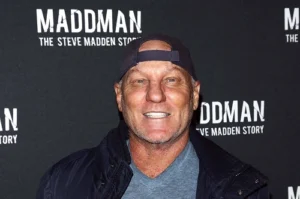



Steve Madden didn’t go to jail because of drugs, violence, or a sudden downfall from fame. He went to jail because of financial crime tied to Wall Street corruption, at a time when his shoe brand was exploding in popularity.
Steve Madden served 31 months in federal prison after pleading guilty to multiple crimes connected to stock manipulation and fraud. His case became one of the most high-profile white-collar prosecutions of the early 2000s.
Here’s the full story.
Steve Madden’s Rise Before the Arrest
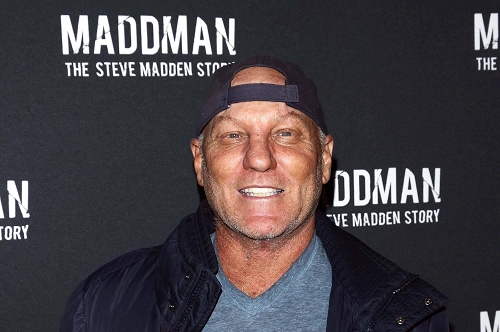
In the 1990s, Steve Madden was everywhere. His chunky platform shoes dominated fashion, especially among young women. The Steve Madden brand grew rapidly and went public in 1993, turning Madden into a multimillionaire almost overnight.
But behind the scenes, Madden wasn’t just designing shoes. He was deeply involved in stock market manipulation schemes that eventually caught the attention of federal investigators.
The Wall Street Connection
At the center of the case was Jordan Belfort, the infamous stockbroker later portrayed in The Wolf of Wall Street. Belfort and his firm, Stratton Oakmont, specialized in “pump-and-dump” schemes—artificially inflating stock prices and then selling off shares for huge profits.
Steve Madden became closely involved with Belfort.
Prosecutors later revealed that:
- Madden paid Belfort millions of dollars to manipulate Steve Madden Ltd. stock
- The goal was to inflate the share price artificially
- Madden personally benefited from the inflated stock value
This wasn’t passive involvement. The government argued Madden was an active participant.
What Crimes He Committed
In 2002, Steve Madden pleaded guilty to several federal charges, including:
- Securities fraud – manipulating the stock price of his own company
- Money laundering – moving illicit profits through hidden accounts
- Conspiracy – coordinating with brokers to deceive investors
The fraud caused significant financial losses to ordinary investors while enriching those inside the scheme.
Why the Case Was So Serious
Steve Madden wasn’t just another executive caught in a gray area. Prosecutors emphasized that:
- He knowingly broke securities laws
- He used his position as CEO to mislead the public
- He continued the scheme even after regulators began investigating
At the time, corporate crime was under intense scrutiny, especially after scandals like Enron. The government wanted to send a message.
The Prison Sentence
In 2002, a federal judge sentenced Steve Madden to:
- 41 months in federal prison
- Three years of supervised release
- Millions of dollars in fines and forfeitures
His sentence was later reduced to 31 months due to cooperation and other factors.
Madden served his time in a federal prison camp, a low-security facility used for non-violent offenders. He was released in 2005.
Life in Prison and Personal Reckoning
While incarcerated, Madden went through a period of deep self-reflection. He later admitted that:
- Greed drove many of his decisions
- He believed he was “too smart to get caught”
- Prison stripped away his ego and forced accountability
Unlike some executives who deny wrongdoing forever, Madden publicly accepted responsibility.
Career After Jail
Many people expected his career to be over.
It wasn’t.
After his release:
- He returned to the fashion industry
- He rebuilt the Steve Madden brand
- The company eventually regained strong market value
Madden stepped away from the CEO role but remained involved creatively. Over time, the brand outgrew the scandal.
Why This Case Still Matters
Steve Madden’s jail sentence stands out because:
- He was a household-name designer
- The crime involved his own company’s stock
- He was wealthy, famous, and still went to prison
It became a textbook example of how white-collar crime can carry real consequences.
Final Note
Steve Madden went to jail because he conspired with corrupt stockbrokers to manipulate his company’s stock, laundered money, and defrauded investors.
He wasn’t punished for being rich or successful. He was punished for breaking federal securities laws and abusing his power as a CEO.
His story is one of excess, collapse, accountability—and an unlikely comeback.